
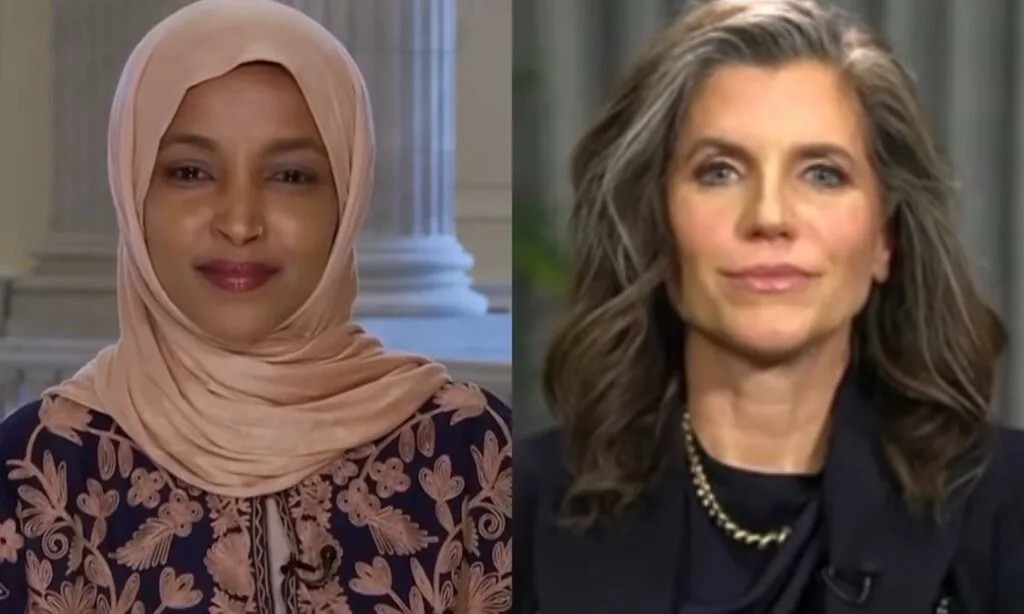

Ilhan Omar and Nancy Mace’s Social Media Feud Erupts Over Iran’s Supreme Leader
A public feud between Rep. Ilhan Omar of Minnesota and Rep. Nancy Mace of South Carolina intensified on X (formerly Twitter), highlighting deep divisions in Congress over Iran’s leadership and U.S. foreign policy. The clash centered on comments about Iran’s Supreme Leader and broader questions about military action, diplomacy, and America’s role in the Middle East, with both lawmakers using social media to sharply criticize each other’s positions.
The dispute began after Rep. Ilhan Omar posted criticism of U.S. military actions related to Iran, warning about the dangers of escalation and questioning the legality of potential military strikes. According to Fox News, Omar described the situation as a dangerous path toward war and warned against what she characterized as an “illegal regime change war,” arguing that military escalation would destabilize the region and put lives at risk (Fox News).
Rep. Nancy Mace quickly responded on X, criticizing Omar’s comments and accusing her of undermining U.S. national security interests. Mace’s response reflected a broader Republican position that Iran’s leadership represents a major threat and that strong action is necessary to deter aggression and protect U.S. allies. The exchange quickly escalated, with both lawmakers directly responding to each other in increasingly personal and pointed terms.
Personal Attacks Escalate the Exchange
As the feud unfolded, the tone shifted from policy disagreement to personal attacks. Fox News reported that previous exchanges between the two lawmakers included harsh rhetoric, with Mace previously telling Omar to “maybe Somalia can take you back,” referencing Omar’s birthplace before she immigrated to the United States and became a citizen (Fox News). Omar fired back by accusing Mace of being unstable and unfit for office, writing that Mace “belongs in rehab, not Congress,” according to Fox News’ coverage of their social media clashes (Fox News).
While those earlier comments were made during separate disputes, they illustrate the increasingly confrontational nature of the relationship between the two lawmakers. The latest feud over Iran’s leadership followed a similar pattern, with both sides questioning each other’s judgment and patriotism.
The argument also drew significant attention from political commentators and social media users, many of whom weighed in on the broader debate over U.S. policy toward Iran.
Debate Reflects Broader Foreign Policy Divide
At the center of the feud is a fundamental disagreement over how the United States should approach Iran and its Supreme Leader. Omar has consistently argued that diplomacy should be the primary tool in dealing with Iran and has warned that military escalation could lead to devastating consequences. Fox News reported that Omar and other progressive Democrats have voiced concern that military strikes could trigger a larger regional conflict and increase instability (Fox News).
Mace and other Republican lawmakers, on the other hand, have emphasized the need for strong deterrence. They argue that Iran’s leadership poses a serious threat to U.S. national security and allies in the region and that forceful action may be necessary to prevent further aggression.
These opposing viewpoints reflect a broader partisan divide in Congress over military intervention and foreign policy strategy.
Social Media’s Role in Modern Political Battles
The feud also highlights how social media has become a central battleground for political disputes. Rather than limiting disagreements to formal congressional debate, lawmakers increasingly use platforms like X to communicate directly with each other and the public.
Fox News noted that the public nature of the exchange amplified the dispute and allowed both lawmakers to frame the debate for their supporters in real time (Fox News).
Social media platforms allow politicians to quickly respond to events, but they also increase the likelihood of heated exchanges that can escalate rapidly.
A Continuing Political Rivalry
The Iran-related dispute is just the latest chapter in an ongoing rivalry between Omar and Mace. Their clashes often reflect broader ideological differences between progressive Democrats and conservative Republicans, particularly on issues involving national security and foreign policy.
As tensions involving Iran continue to shape U.S. foreign policy discussions, confrontations like this one demonstrate how deeply divided lawmakers remain—and how those divisions increasingly play out in public view.
Sources: Fox News reporting on statements by Rep. Ilhan Omar and Rep. Nancy Mace, and public posts on X referenced in Fox News coverage.