
House Rejects Aviation Safety Bill After Pentagon Withdrawal, Families Demand Second Vote

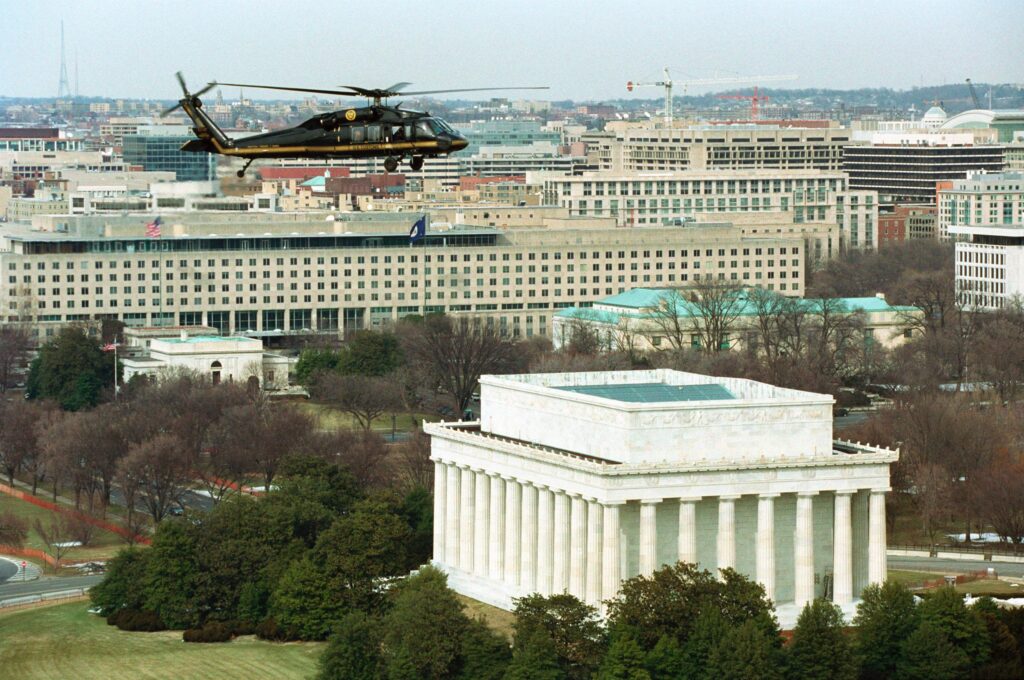
The U.S. House of Representatives rejected a bipartisan aviation safety bill on February 24 after the Pentagon abruptly withdrew its support, stalling legislation tied to a deadly 2025 midair collision near Reagan National Airport. The bill, known as the ROTOR Act, was designed to tighten aircraft tracking requirements and increase oversight of helicopter routes near commercial airports.
According to Reuters, the measure failed under a two-thirds suspension vote threshold, despite receiving 264 votes in favor. More than 130 Republicans voted against it after the Department of Defense raised last-minute objections.
Families of the 67 victims who died in the January 2025 collision between an American Airlines regional jet and a U.S. Army Black Hawk helicopter traveled to Capitol Hill urging passage. According to NPR, carried by WRVO, relatives called the bill “common-sense reform” intended to prevent another tragedy.
Pentagon Raises National Security Concerns
One day before the vote, the Pentagon reversed its position. According to NPR, Pentagon spokesman Sean Parnell warned the bill could create “unresolved budgetary burdens and operational security risks.”
House Armed Services Committee Chairman Rep. Mike Rogers argued the legislation would “undermine national security” by requiring certain military aircraft to broadcast tracking data more consistently.
Supporters countered that exemptions already existed for sensitive operations. According to Reuters, the National Transportation Safety Board (NTSB) found systemic FAA failures contributed to the 2025 crash and recommended expanded use of Automatic Dependent Surveillance–Broadcast (ADS-B) tracking systems.
Investigators Point to Systemic Failures
According to Reuters, the NTSB reported that the FAA allowed helicopters to operate too closely to commercial air traffic without sufficient safeguards. Investigators also found that between 2021 and 2024, there were 15,200 airspace separation incidents near Reagan National, including 85 close calls.
The ROTOR Act would have required broader ADS-B compliance by 2031, increasing aircraft visibility in crowded airspace.
Sen. Ted Cruz, a co-author of the bill, said after the vote that the setback was “a temporary delay,” according to NPR.
What Comes Next
House leaders are considering alternative aviation safety proposals, but families of victims say they will continue pushing for the Senate-passed version.
The broader issue now centers on balancing aviation transparency with operational security. For grieving families, the question is simpler: whether Congress will act before another fatal airspace failure forces the issue again.
The political fight may continue. The safety risks remain.