

Water has always been one of the most valuable and contested resources in the American West. In a region defined by dry climates, expanding cities, and large agricultural industries, access to water is essential for economic survival. But as drought conditions intensify and populations continue to grow, disputes over water rights have increasingly turned into political battles involving states, federal agencies, farmers, and environmental groups.
Across the western United States, policymakers are now grappling with difficult questions about how limited water supplies should be divided among competing users. These decisions have major implications for agriculture, urban growth, energy production, and ecosystem protection.
According to the U.S. Bureau of Reclamation, the Colorado River system alone supplies water to roughly 40 million people across seven western states, making it one of the most important water resources in North America.
As water supplies shrink, the competition for that resource is intensifying.
A System Built on Historic Agreements
Many western water disputes trace their origins to agreements established more than a century ago.
One of the most important frameworks is the Colorado River Compact of 1922, which divided the river’s water between upper basin states—such as Colorado, Utah, and Wyoming—and lower basin states including California, Arizona, and Nevada.
At the time, water allocations were based on estimates of river flow that modern scientists now believe were overly optimistic.
According to research summarized by the U.S. Geological Survey, long-term drought and climate variability have reduced river flows significantly in recent decades.
This mismatch between historical allocations and modern water availability has become a central issue in western water politics.
Agriculture vs. Urban Growth
One of the most significant sources of conflict involves the competition between agricultural water use and rapidly expanding cities.
Agriculture accounts for the majority of water consumption in many western states. Farmers rely heavily on irrigation systems to grow crops in arid environments.
However, fast-growing metropolitan areas—including Phoenix, Las Vegas, and Los Angeles—require enormous volumes of water to support residential populations, industry, and infrastructure.
According to data from the U.S. Department of Agriculture, irrigation accounts for roughly 80 percent of water consumption in many western agricultural regions.
As cities expand, political pressure has grown to reallocate water resources from rural agricultural areas to urban populations.
This shift has created tension between rural communities and urban policymakers.
Environmental Concerns Enter the Debate
In addition to agriculture and urban growth, environmental considerations have become an increasingly important part of water policy discussions.
Many rivers in the West support fragile ecosystems and endangered species that depend on stable water flows. Environmental organizations often advocate for policies that preserve water for wildlife habitats and natural landscapes.
Federal environmental laws sometimes require water managers to maintain certain river flows to protect species.
According to the National Oceanic and Atmospheric Administration, protecting aquatic ecosystems is an important part of long-term water sustainability.
However, these requirements can also create political conflicts when water allocations must be reduced during drought conditions.
The Impact of Drought
Long-term drought conditions have intensified these disputes.
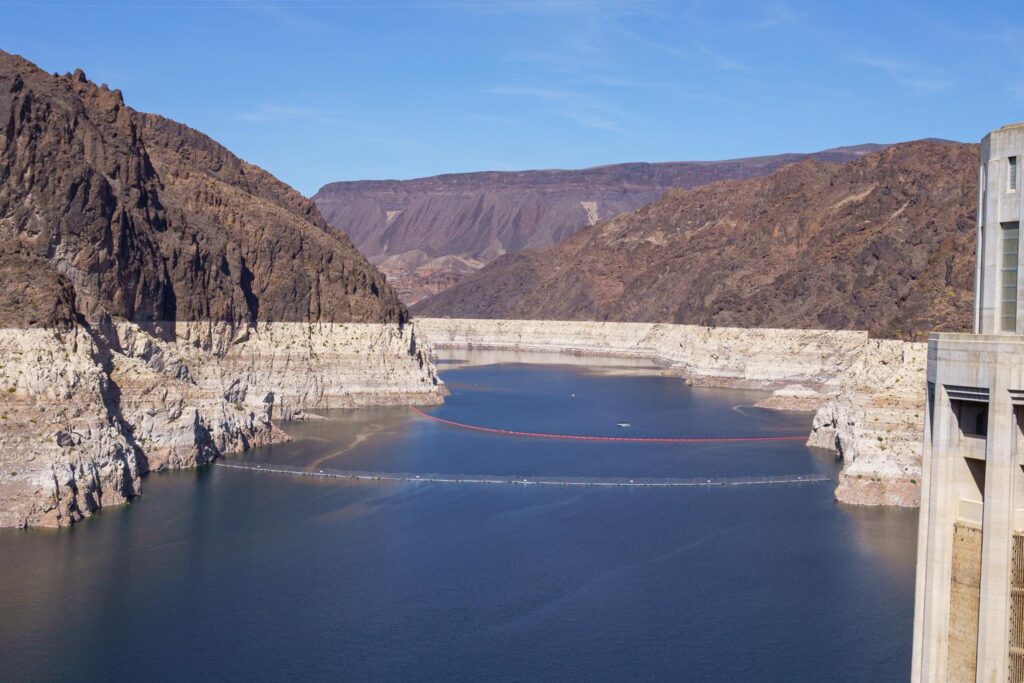
The western United States has experienced some of the driest conditions in recorded history over the past two decades. Reservoirs such as Lake Mead and Lake Powell—two of the largest water storage systems in the country—have seen dramatic declines in water levels.
Images of the so-called “bathtub ring,” a visible mark showing how far water levels have dropped, have become symbolic of the region’s water crisis.
Scientists studying climate trends warn that prolonged drought conditions could become more common in the future.
Federal and State Governments Clash
As water shortages worsen, disagreements between state governments and federal agencies have grown more intense.
The federal government plays a major role in managing large reservoirs and interstate water agreements. At the same time, states control many local water policies and allocation decisions.
These overlapping authorities have created complex legal battles over who ultimately controls water distribution.
According to policy analysis from the Congressional Research Service, western water management involves a complicated system of interstate compacts, federal regulations, and state-level water rights laws.
Resolving disputes often requires lengthy negotiations or court rulings.
The Future of Western Water
With population growth continuing and climate pressures increasing, the battle over water rights in the western United States is unlikely to disappear anytime soon.
Lawmakers must now balance the needs of farmers, cities, and ecosystems while dealing with shrinking water supplies.
For many communities in the West, the outcome of these political debates could determine how their economies—and their landscapes—evolve in the decades ahead.
In a region where water has always been scarce, it may prove to be the most politically powerful resource of all.