
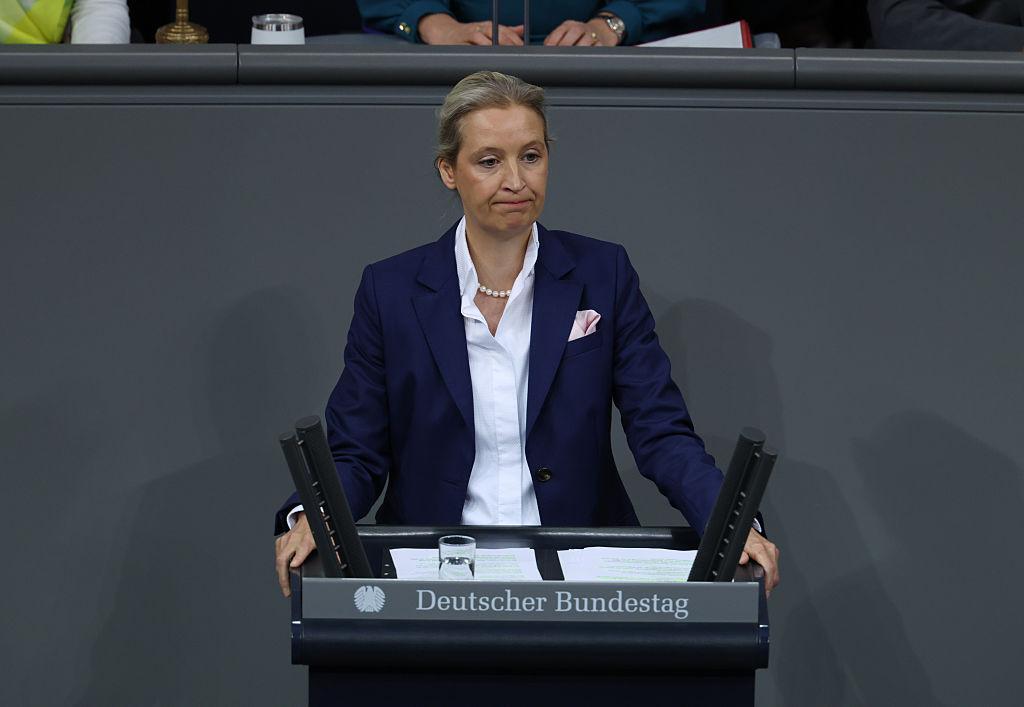

Alice Weidel, co-leader of the right-wing Alternative for Germany party, delivered a forceful message this week declaring that Germany must bring an end to what she described as “uncontrolled migration.” Speaking at a party event, Weidel argued that Germany’s current immigration policies have strained public resources, challenged social cohesion, and fueled political dissatisfaction across the country.
Her remarks reflect the continued rise of Alternative for Germany (AfD), which has positioned itself as the most vocal critic of Berlin’s migration policies. The party has gained support in recent years amid broader European debates over asylum, border enforcement, and integration.
A Hardline Position on Migration
Weidel’s statement framed migration as a defining issue for Germany’s future. She argued that the federal government’s approach—particularly during and after the 2015 refugee crisis—has had long-term consequences for housing availability, welfare spending, education systems, and internal security.
AfD leaders have consistently called for stricter border controls, faster deportations for rejected asylum seekers, and limits on future refugee admissions. Weidel reiterated that her party would push for policies prioritizing national sovereignty and domestic stability.
“Germany must regain control of its borders,” she said, emphasizing what she described as the need for a “fundamental change in direction.”
Germany’s Migration Landscape
Germany experienced a major influx of migrants and asylum seekers beginning in 2015 under then-Chancellor Angela Merkel’s government. Since then, migration has remained one of the most debated political topics in the country.
Supporters of stricter immigration policies argue that local governments are facing mounting pressures—from housing shortages to overstretched social services. Critics of AfD’s position, however, contend that migration has helped offset labor shortages in key sectors, including manufacturing, healthcare, and logistics.
The federal government has defended its approach, stating that migration policy balances humanitarian obligations with security considerations. Recent reforms have sought to streamline asylum processes while also tightening certain enforcement measures.
Political Implications
AfD’s growing support has reshaped Germany’s political landscape. In several eastern German states, the party has polled strongly and in some cases led opinion surveys. Its platform centers on immigration control, energy policy, national identity, and skepticism toward European Union integration.
Weidel’s remarks are likely to intensify debate ahead of future state and federal elections. Mainstream parties have largely rejected AfD’s proposals, warning that hardline migration policies could isolate Germany internationally and undermine its economic interests.
At the same time, some centrist and conservative leaders have acknowledged public concerns over migration management, signaling that immigration will remain a central issue in upcoming campaigns.
A Broader European Debate
Germany is not alone in facing heated migration discussions. Across Europe, several governments have introduced stricter asylum policies amid rising political pressure. Voters in multiple countries have shown growing concern about border security, integration challenges, and public spending.
Weidel’s declaration that Germany is “finished” with mass migration aligns with a broader populist movement that has gained traction in parts of Europe over the past decade.
What Comes Next
While AfD does not currently hold governing power at the federal level, its influence in public debate is significant. Whether Weidel’s proposals translate into concrete legislative change will depend on electoral outcomes and coalition dynamics within Germany’s parliamentary system.
For now, the migration debate remains one of the most polarizing issues in Germany’s politics—shaping alliances, campaign messaging, and public discourse.
As economic pressures, global conflicts, and demographic shifts continue to influence migration patterns, the question of how Germany balances border control, humanitarian commitments, and economic needs is unlikely to fade anytime soon.