
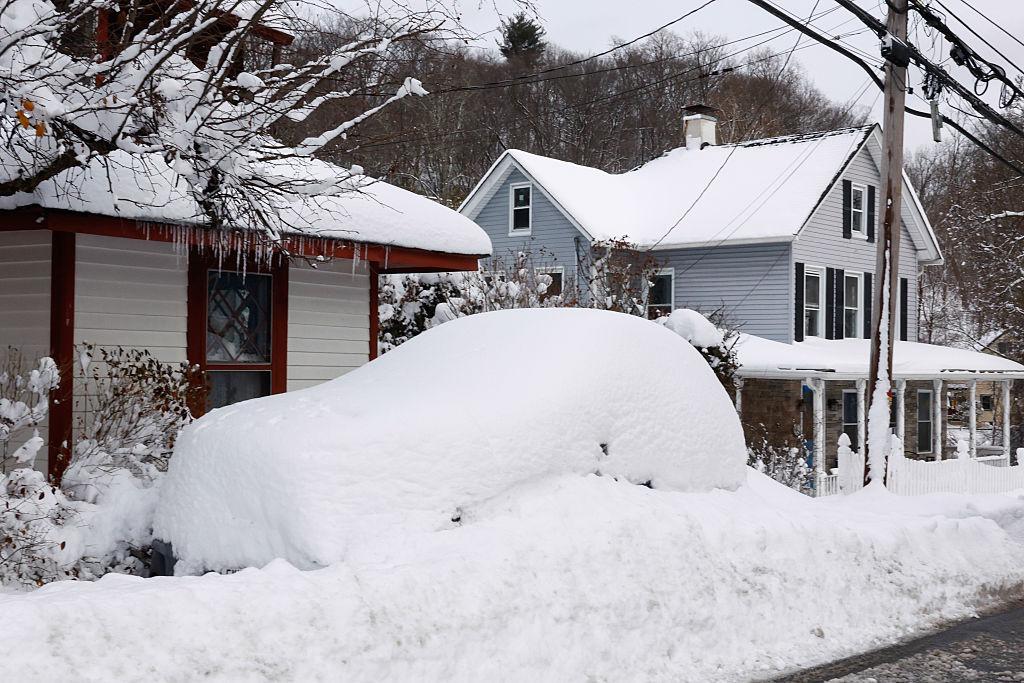
Historic Blizzard Slams Northeast, Leaving Thousands Without Power

A powerful winter storm battered the northeastern United States in late February, dumping massive snowfall across several states, crippling travel, and leaving hundreds of thousands of residents without power.
The storm, widely referred to as the February 2026 North American Blizzard, brought historic snowfall totals to parts of New England and the Mid-Atlantic region. According to meteorological reports summarized by Wikipedia and weather agencies, some areas recorded nearly three feet of snow as the storm moved up the East Coast.
Officials across multiple states declared emergencies as crews worked to restore power and clear roadways.
Heavy Snow Paralyzes Transportation
The storm shut down major transportation networks across the Northeast.
Airports across New York, Boston, and Philadelphia canceled hundreds of flights as visibility dropped and runways became snow-covered. Interstate highways were temporarily closed in several areas as whiteout conditions made travel extremely dangerous.
Local officials urged residents to stay home as snow removal crews attempted to keep major roadways open.
Power Outages Spread Across Multiple States
According to regional utility reports cited by weather and emergency management officials, more than 600,000 customers lost electricity during the peak of the storm.
Heavy snow and strong winds caused trees and power lines to fall across several states.
Emergency crews worked through the storm to restore service, but officials warned some outages could last days due to the extent of the damage.
Emergency Declarations Issued
Governors in several northeastern states issued emergency declarations as conditions worsened.
These declarations allowed states to mobilize National Guard units, coordinate snow removal efforts, and deploy emergency services to affected communities.
State officials emphasized that the declarations were necessary to ensure resources could be quickly deployed.
Severe Weather Patterns Continue
Meteorologists say the storm was fueled by a powerful low-pressure system that intensified rapidly along the Atlantic coast.
According to weather analysts cited by national outlets, the storm combined heavy moisture from the Atlantic Ocean with extremely cold air moving south from Canada.
The result was a classic “Nor’easter” capable of producing intense snowfall and hurricane-force wind gusts.
Recovery and Cleanup
As the storm moved offshore, communities across the Northeast began the long process of cleanup and recovery.
Snow removal operations continued around the clock in many cities, while utility companies worked to restore power to affected areas.
Emergency management officials reminded residents to remain cautious during cleanup operations, warning that icy roads and downed power lines remained hazards.
A Reminder of Winter’s Power
While blizzards are not uncommon in the Northeast, the scale of this storm served as a reminder of how disruptive extreme weather can be.
From grounded flights to widespread power outages, the storm’s impact stretched across multiple states and millions of residents.
For now, officials say the priority remains restoring power, clearing roads, and helping communities recover from one of the most significant winter storms of the season.