
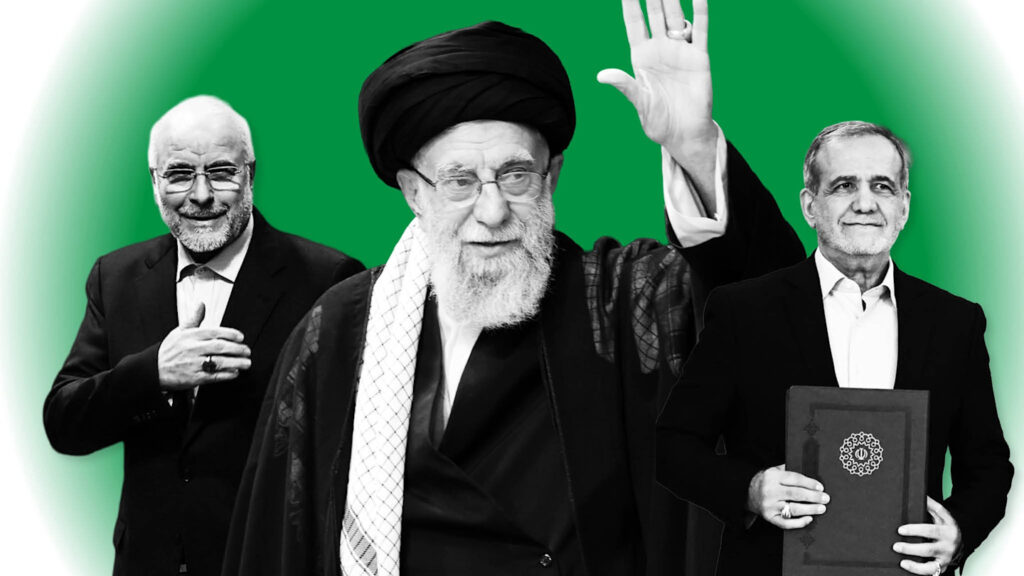

Iran’s leadership is moving quickly to select a new supreme leader as the country’s war with Israel and the United States enters its second week, a development that could reshape both the internal politics of the Islamic Republic and the broader conflict unfolding across the Middle East.
Iran’s powerful Assembly of Experts, the clerical body responsible for choosing the country’s supreme leader, has reportedly reached a consensus on a successor but has not yet publicly revealed the individual selected for the position. According to reporting from Reuters, members of the council indicated that a majority decision had been reached and that the formal announcement would come once the transition process is finalized.
The leadership decision comes during one of the most volatile periods in Iran’s modern history, with the country engaged in escalating military exchanges across the region.
Leadership Vacuum Following Khamenei’s Death
The succession process began after the death of Ayatollah Ali Khamenei, who had served as Iran’s supreme leader since 1989 and held ultimate authority over the nation’s military, judiciary, and foreign policy.
According to multiple international reports cited by Reuters, Khamenei was killed during early strikes connected to the expanding regional conflict, an event that immediately triggered constitutional procedures for replacing Iran’s highest authority.
Khamenei’s death created a major leadership vacuum inside the Islamic Republic. As Reuters noted in its coverage of the succession process, the Assembly of Experts is tasked under Iran’s constitution with appointing a new supreme leader whenever the position becomes vacant.
Interim Leadership Maintains Government Control
While the Assembly of Experts works toward formally announcing a permanent successor, Iran has been governed by a temporary leadership structure outlined in the country’s constitution.
Political analysts cited by Reuters explain that an interim council composed of senior government figures assumes key leadership responsibilities during the transition period. The arrangement allows the Iranian government to maintain continuity of authority while the clerical body finalizes its selection.
According to constitutional procedures described in reporting by Reuters and other international outlets, the interim leadership is responsible for overseeing the country’s military and government operations until the new supreme leader officially takes office.
Assembly of Experts Reaches Majority Decision
Members of the Assembly of Experts have indicated that the council has already agreed on a candidate to replace Khamenei, though the name has not yet been made public.
Reuters reported that Iranian cleric Mohammad Mehdi Mirbagheri confirmed the council had reached what he described as a “firm opinion reflecting the majority view” regarding the next leader.
Analysts say the delay in announcing the name may reflect security concerns given the ongoing military conflict and the heightened risk of targeted strikes against senior Iranian leadership.
Potential Candidates Draw Global Attention
Before the reported consensus was reached, several individuals had been widely discussed as potential successors.
One of the most closely watched figures was Mojtaba Khamenei, the son of the late supreme leader. According to reporting from CBS News, Mojtaba has long been viewed as a powerful behind-the-scenes figure within Iran’s political establishment and has close ties to the Islamic Revolutionary Guard Corps.
Other potential candidates mentioned by analysts included senior clerics such as Alireza Arafi and Hassan Khomeini, the grandson of Iran’s revolutionary founder Ayatollah Ruhollah Khomeini. International political analysts cited by Reuters have noted that the final choice could significantly influence Iran’s future political direction and military strategy.
Conflict Continues Across the Region
The leadership transition is unfolding while military tensions continue to escalate throughout the Middle East.
Reuters reported that missile and drone strikes have been exchanged across multiple fronts as the war enters its second week, with Israeli forces targeting Iranian infrastructure while Iranian-backed forces have launched retaliatory attacks throughout the region.
The conflict has already raised concerns among international observers that the fighting could expand into a broader regional war involving additional countries.
Some Israeli officials have also publicly stated that future Iranian leadership could be considered military targets if they continue directing attacks against Israel. Reuters reported that Israeli military officials indicated they would pursue “every successor” involved in the conflict.
A Critical Decision for Iran’s Future
The selection of Iran’s next supreme leader carries enormous consequences for the country and the region.
The supreme leader holds ultimate authority over Iran’s armed forces, national security decisions, and strategic direction. As Reuters has noted in its coverage of Iran’s political system, the position is the most powerful office in the country and often shapes Iran’s long-term foreign policy and military strategy.
With the war intensifying and regional tensions rising, the individual chosen to replace Khamenei will immediately face the challenge of guiding the country through a period of military conflict and political uncertainty.
A Defining Moment for the Islamic Republic
Iran now faces one of the most consequential leadership transitions since the Islamic Republic was founded in 1979.
The combination of a wartime environment and the death of a leader who ruled for nearly four decades has created a high-stakes political moment inside the country. The decision made by the Assembly of Experts will likely shape Iran’s political trajectory and its role in the ongoing conflict.
As the war continues into its second week, the announcement of Iran’s next supreme leader may become one of the most important developments in determining how the crisis unfolds across the Middle East.