
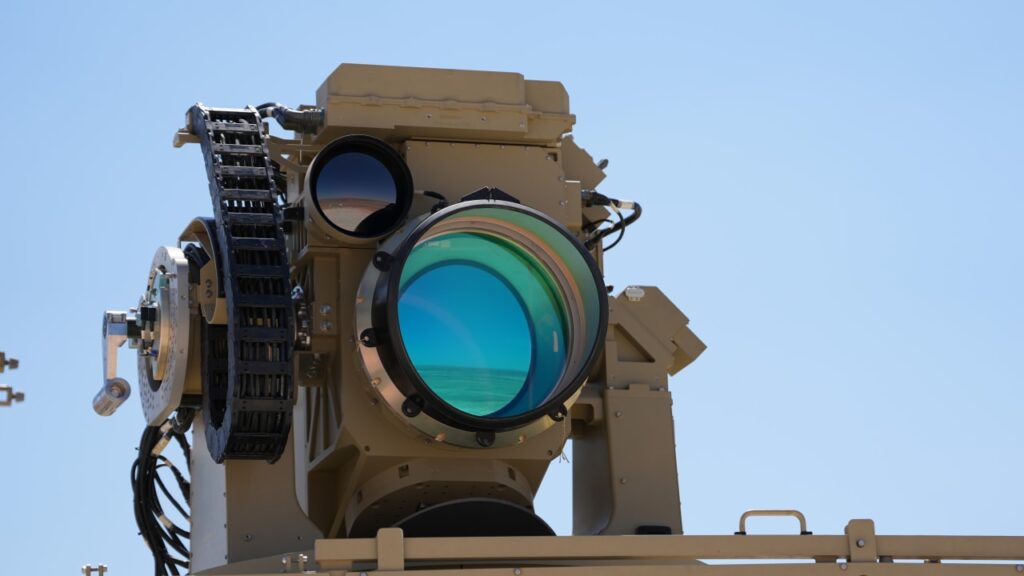
Israel’s Iron Beam Laser: What It Can Do — and Whether It Was Used Against Rockets From Iran
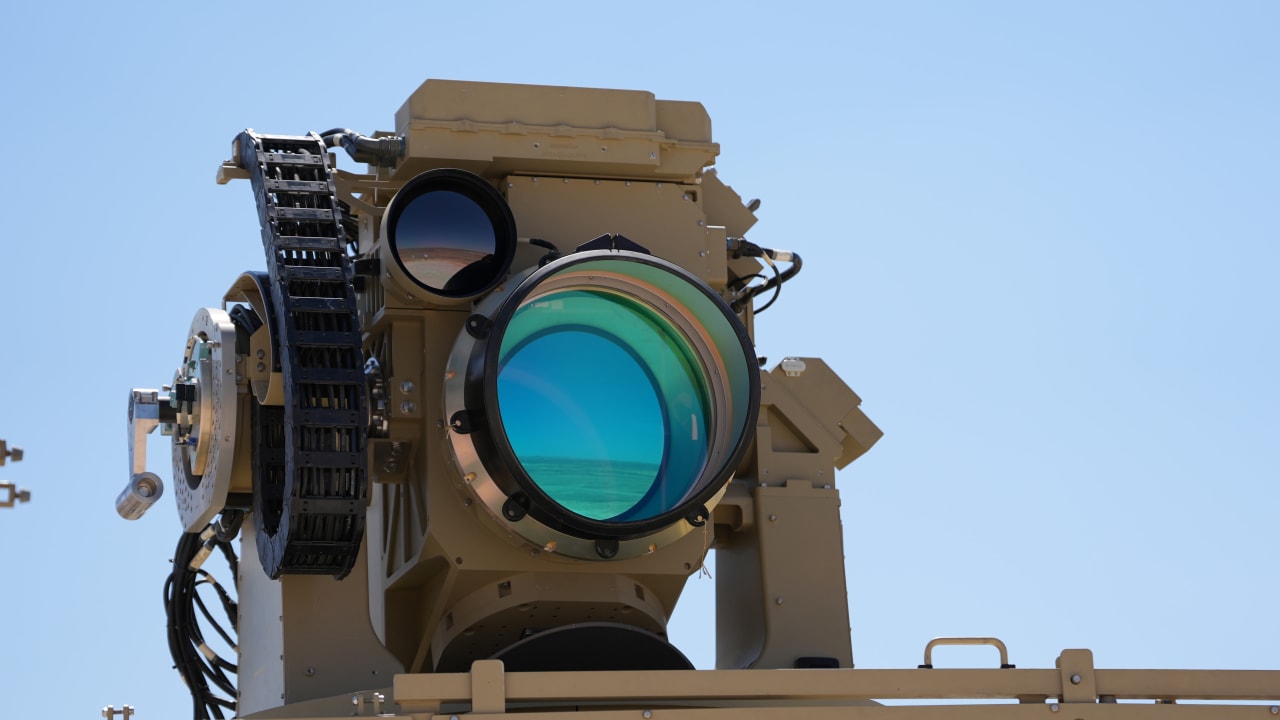
Social media speculation surged this week after video clips appeared to show rockets launched from southern Lebanon exploding moments after takeoff. Some online accounts claimed Israel’s new Iron Beam laser defense system was responsible. However, there has been no official confirmation from the Israel Defense Forces (IDF) that lasers were used in those specific incidents.
According to reporting by The Jerusalem Post, the videos circulating online did not clearly show laser interception, though they fueled renewed interest in Israel’s operational directed-energy capabilities.
What Is Iron Beam?
Iron Beam is a ground-based high-energy laser air defense system developed by Rafael Advanced Defense Systems. The system is designed to intercept short-range rockets, mortars, and unmanned aerial vehicles (UAVs).
Israel’s Ministry of Defense confirmed in late 2025 that the system had been delivered to the IDF and successfully integrated into the country’s multi-layered air defense array. In an official statement, the ministry said the laser system had “successfully intercepted rockets, mortars, and UAVs” during operational testing.
Iron Beam operates alongside Israel’s established missile defense systems: Iron Dome, David’s Sling, and Arrow, according to the Israeli Defense Ministry.
Why Lasers Now?
Laser weapons have been under development in Israel and the United States for decades. However, defense analysts cited by The Jerusalem Post report that recent advances in beam control, power generation, and targeting systems have made mobile high-energy laser platforms practical for battlefield deployment.
According to Israel’s Ministry of Defense, the system can engage targets at ranges of up to approximately 10 kilometers. Unlike interceptor missiles, which can cost tens of thousands of dollars per launch, laser interceptions cost only a fraction of that amount per shot, dramatically shifting the cost equation in air defense operations.
The development is particularly significant in countering relatively inexpensive threats such as the Iranian-made Shahed-136 drone, which has been widely used by Iranian-backed forces in regional conflicts.
System Variants and Capabilities
Rafael has developed several variants of the system, including Lite Beam, a 10-kilowatt laser, and Iron Beam-M, a more powerful 50-kilowatt version capable of vehicle-mounted deployment.
In 2025, Rafael unveiled the Iron Beam 450 at the DSEI defense exhibition in the United Kingdom. According to company materials and reporting by The Jerusalem Post, the “450” refers to the 450-millimeter aperture of the system.
The Ministry of Defense has also stated that one version of the system is known in Hebrew as “Or Eitan.”
Officials have consistently described the system as a complementary capability rather than a replacement for missile interceptors.
Technical Advantages
According to official Israeli defense statements, the key advantages of Iron Beam include:
-
Lower cost per interception compared to missile-based systems
-
Rapid response capability
-
Integration into Israel’s existing radar and tracking infrastructure
The Ministry of Defense stated in May 2025 that laser systems had “successfully intercepted scores of enemy threats” during operational use in Israel’s multi-front conflict.
Operational Limitations
Despite the technological breakthrough, defense officials acknowledge limitations.
According to analysis published by The Jerusalem Post, ground-based laser systems require direct line-of-sight to their targets. Terrain, buildings, or atmospheric conditions such as dust and heavy cloud cover can degrade beam effectiveness.
Unlike interceptor missiles, which can maneuver mid-flight, a laser must remain focused on a target for several seconds to burn through critical components. That engagement time means a single laser unit generally addresses one target at a time.
In contrast, systems like Iron Dome can fire multiple interceptors simultaneously, guided by radar capable of tracking numerous incoming threats.
Was Iron Beam Used This Week?
While the IDF confirmed that laser systems are operational, officials have not publicly confirmed their use in the specific rocket incidents circulating on social media this week.
According to reporting by The Jerusalem Post, the videos did not show visible laser interception and may have captured rocket malfunctions or other defensive measures.
The IDF traditionally limits disclosure of operational details during active engagements, particularly along the northern border with Lebanon, where tensions with Hezbollah remain high.
Strategic Implications
Israel’s deployment of an operational laser defense platform marks a significant milestone in directed-energy warfare. Defense analysts note that the technology may alter long-term cost dynamics in missile defense, especially against short-range threats.
The United States and other allied nations are also developing similar systems. However, Israel is among the first to integrate a laser defense system into active operational service.
Military observers caution that while lasers represent a major advancement, they are not yet a standalone solution. Their short range, weather sensitivity, and single-target engagement limitations mean they function best as part of a layered defense strategy.
The Bottom Line
Israel’s Iron Beam laser system is operational and integrated into the IDF’s air defense network, according to Israel’s Ministry of Defense and reporting by The Jerusalem Post.
However, there is no official confirmation that the system was responsible for the rocket explosions seen in recent Lebanon-related videos circulating online.
Directed-energy weapons are no longer theoretical. But their battlefield role is still evolving — and their deployment remains closely guarded in real-time conflict situations.