
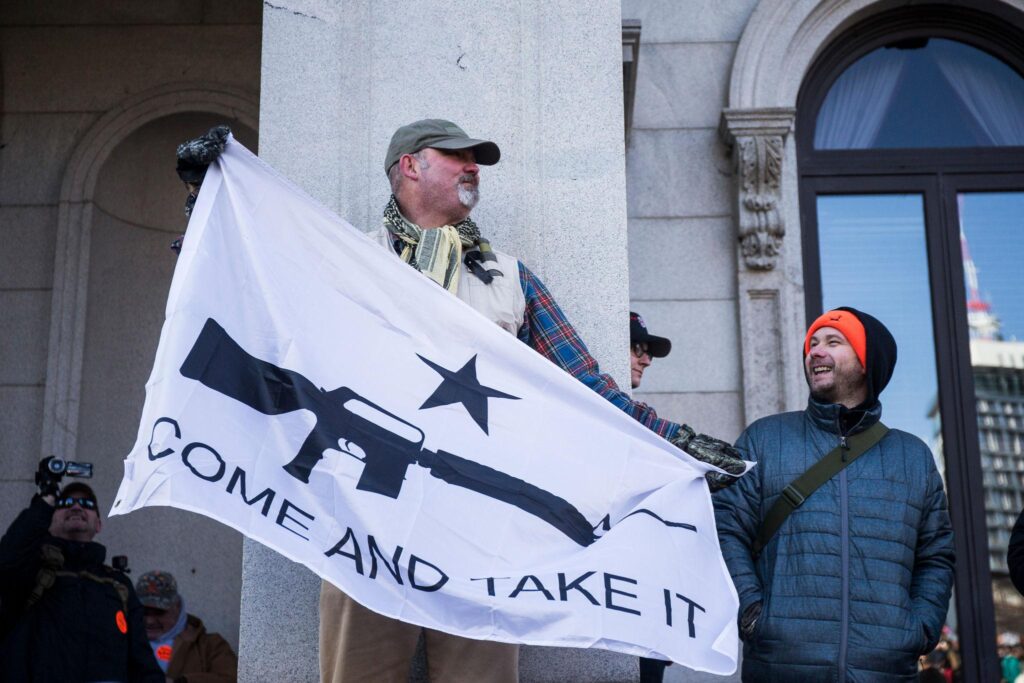
Red Flag Laws Under Fire: Courts and States Reignite the National Gun Rights Debate

Gun policy returned to the national spotlight this week as legal challenges to state-level “red flag” laws continue to move through federal courts. Known formally as Extreme Risk Protection Orders (ERPOs), these laws allow courts to temporarily remove firearms from individuals deemed a threat to themselves or others.
The debate has intensified following recent court interpretations of the Second Amendment, reshaping how firearm regulations are evaluated.
The Supreme Court’s Shadow
The legal landscape shifted after the 2022 Supreme Court ruling in New York State Rifle & Pistol Association v. Bruen, which expanded Second Amendment protections and required modern gun regulations to align with historical firearm traditions.
Since that decision, gun rights groups have challenged various firearm restrictions, arguing they fail the historical standard outlined by the Court. Some lower courts have upheld red flag laws, citing due process safeguards. Others have raised concerns about the speed at which firearms can be confiscated before a full hearing.
According to several state attorneys general defending ERPO statutes, the laws are narrowly tailored and temporary, with judicial oversight built into the process.
States Split Along Political Lines
Florida enacted a red flag law after the 2018 Parkland school shooting and has issued thousands of protection orders since. California and New York expanded their statutes in recent years. Meanwhile, states such as Texas have resisted adopting ERPO laws, citing constitutional and due process concerns.
Gun rights organizations argue the laws can be misused in domestic disputes or personal conflicts. Gun safety advocates counter that evidentiary standards and court review prevent abuse.
According to the Department of Justice, federal funding has been made available to help states implement crisis intervention programs, including red flag mechanisms.
Election-Year Implications
With gun violence remaining a top concern among voters, lawmakers face mounting pressure to define their positions. Congressional proposals remain stalled, leaving most action at the state level.
Legal analysts expect additional Supreme Court clarification in future terms, particularly if lower courts continue issuing conflicting rulings.
As the judicial system weighs the constitutional boundaries, voters will ultimately decide whether red flag laws expand or contract nationwide.
The Second Amendment debate, once centered in Washington, is now unfolding state by state—and ruling by ruling.